


Unlock when protein or EAAs deliver the best muscle, timing, and budget wins.
Protein vs EAA: what they actually provide for muscle protein synthesis
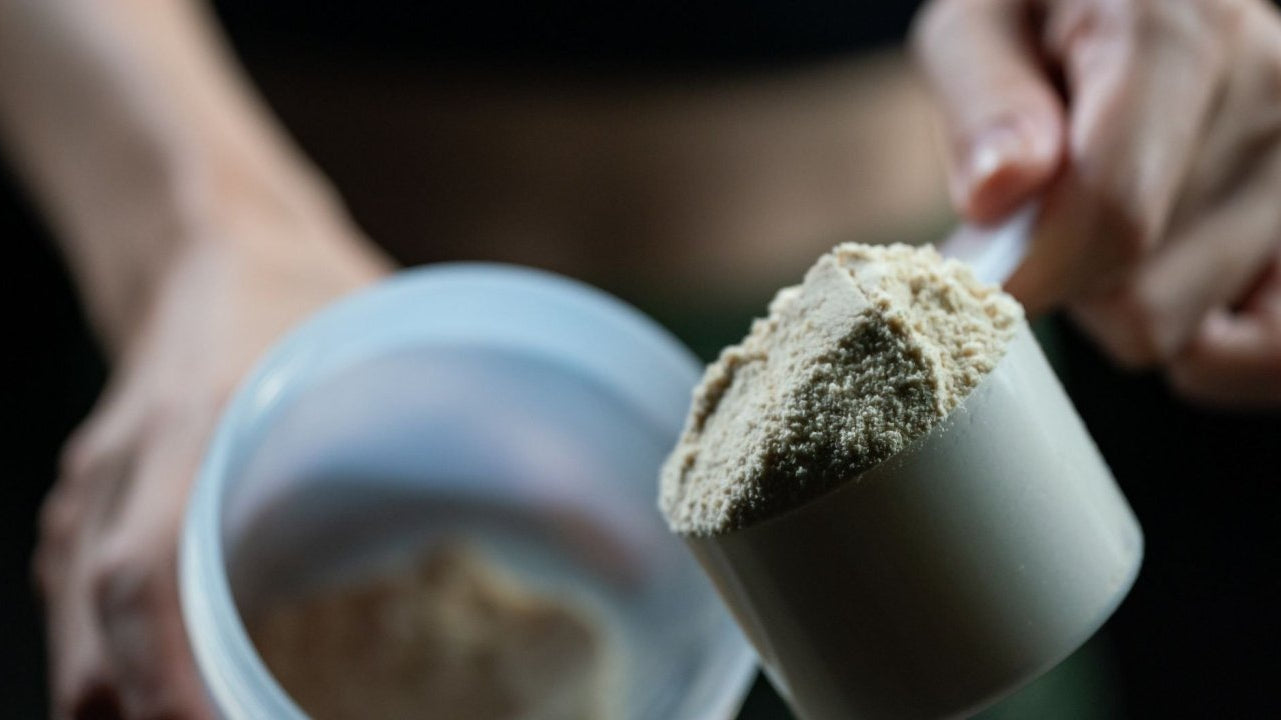
Protein powders like whey, casein, blends, or plant proteins give all essential amino acids plus non-essential amino acids, typically 20-30 g protein and about 100-140 kcal per serving. EAAs provide only the 9 essentials in fast-absorbing free form, usually 3-10 g per serving with under 50 kcal. In simple terms: protein powders are a full meal-like protein source; EAAs are a low-calorie, fast signal for muscle building. The EAA fraction is what directly drives muscle protein synthesis (MPS), while non-essentials are rarely limiting in mixed diets (Frontiers in Nutrition, 2024; Open Access Journals, n.d.). Acute EAA doses reach the blood faster than intact protein, helping produce a rapid anabolic response (Tipton et al., 2001; GSSI Sports Science Exchange, n.d.).
When to take protein vs EAAs - real-world timing and context
Use protein powder when you need to hit daily protein targets, roughly 1.6-2.2 g per kg body weight for lifters. Simple translation: a 75 kg athlete aims for about 120-165 g per day. Protein shakes also help with satiety and pair easily with meals or post-workout (GSSI Sports Science Exchange, n.d.; TandF Online, 2023).
Use EAAs when calories are tight and you want MPS with minimal energy, during fasted or early sessions, if shakes bloat you, or for small intra-workout hits without a heavy gut load. Typical effective EAA ranges of about 6-15 g stimulate MPS, especially with higher leucine content. In simple terms: think of EAAs as a quick spark, protein as the full tank (Frontiers in Nutrition, 2024; Open Access Journals, n.d.; Tipton et al., 2001).
Practical hybrid: rely on food plus protein powders to cover daily protein, then deploy EAAs around problem windows like dawn training, long gaps between meals, or deep cuts (Frontiers in Nutrition, 2024; TandF Online, 2023).
Price-performance: cost per useful amino acid and per anabolic effect
Typical servings: whey delivers about 20-25 g total protein with roughly 8-12 g of that as EAAs at about 100-130 kcal. EAAs commonly deliver 6-10 g EAAs with under 50 kcal. In most markets, cost per gram of total protein from powders is lower than cost per gram of EAAs. Translation: shakes usually win on value for meeting daily protein goals. EAAs can still be a savvy tool when every calorie counts or you want minimal digestion during training (Frontiers in Nutrition, 2024; GSSI Sports Science Exchange, n.d.; TandF Online, 2023).
Simple decision guide:
- Hitting daily protein on a budget - protein powder usually wins on cost per gram and satiety.
- Bulking or maintenance with normal calories - protein powder for efficient protein plus energy.
- Aggressive fat loss with tight calories - targeted EAAs to spark MPS with fewer calories.
- Fasted or early-morning hard training - EAAs for minimal gut load, protein if calories are fine.
- GI issues with shakes - EAAs often feel lighter.
- General lifestyle use - protein powder integrates easily into meals.
Science snapshot: what actually moves the needle
- EAAs alone robustly stimulate MPS, especially with sufficient leucine and total EAAs around 6-15 g. Translation: a modest scoop of EAAs can flip the muscle-building switch on (Frontiers in Nutrition, 2024; Open Access Journals, n.d.).
- Free-form EAAs hit the bloodstream faster than EAAs from intact protein, sometimes matching or beating short-term MPS with a smaller gram dose. Simple: faster in, faster effect, but it may not last as long (Tipton et al., 2001).
- Intact proteins like whey still elevate MPS effectively and sustain amino acid release for hours. Think quick spark vs steady burn (GSSI Sports Science Exchange, n.d.).
- Over weeks and months, total daily protein plus consistent training dominates outcomes like hypertrophy. Timing tweaks are secondary as long as intake is adequate (Frontiers in Nutrition, 2024; TandF Online, 2023).
- The useful window spans shortly before to within about 2 hours after training. Translation: you do not need minute-by-minute precision to benefit (GSSI Sports Science Exchange, n.d.; Open Access Journals, n.d.).
Two simple protocols you can plug in today
- Budget and bulk-friendly: 3-4 protein doses from food plus 1-2 shakes to reach 1.6-2.2 g per kg daily. No EAA needed if you hit your target.
- Cut and performance-focused: Hit your daily protein mostly with food. Add 1 small EAA dose pre or intra-workout and optionally 1 shake later to meet totals.

Safety and quality checklist
For healthy adults, both protein powders and EAAs are generally safe when total protein stays within typical athletic ranges, roughly up to about 2.2-3.0 g per kg per day in sport nutrition contexts. Simple: if your kidneys are healthy, this range is commonly used by athletes. Those with kidney or liver disease should consult a clinician. Stick to labeled doses, split big intakes across the day, and choose third-party tested products for quality (GSSI Sports Science Exchange, n.d.; TandF Online, 2023).
Key takeaways
- Protein vs EAA is not either-or - match the tool to the job.
- Protein powder wins for daily totals and cost per gram.
- EAAs shine for fasted training, deep cuts, and GI comfort.
- 6-15 g EAAs can spark MPS; 20-25 g protein provides a fuller, longer signal.
- Total daily protein and training consistency drive long-term gains.

Conclusion
Bottom line: use protein powders to reliably and affordably hit daily protein, then drop EAAs in as a smart, low-calorie booster around tough sessions or during cuts. Ready to dial it in with quality formulas? Also a sidenote - we at NorysForge offer a great value pack of EAAs and both Protein isolate and Regular whey, check them out here:
View our EAA offer (opens in new tab)
View our Whey protein (opens in new tab)
View our Protein isolate (opens in new tab)
Sources used
Frontiers in Nutrition. (2024). Essential amino acids, anabolic signaling, and muscle protein synthesis. Frontiers in Nutrition. see the Article
Open Access Journals. (n.d.). Role of essential amino acids in protein synthesis and muscle growth. Open Access Journals. see the Article
Gatorade Sports Science Institute. (n.d.). Sports Science Exchange 107 - Protein consumption and resistance exercise: Maximizing anabolic potential. GSSI. see the Article
Tipton, K. D., Rasmussen, B. B., Miller, S. L., Wolf, S. E., Owens-Stovall, S. K., Petrini, B. E., & Wolfe, R. R. (2001). Timing of amino acid-carbohydrate ingestion amplifies muscle anabolism after resistance exercise. American Journal of Physiology - Endocrinology and Metabolism. see the Article
Taylor & Francis Online. (2023). Protein intake strategies for strength and physique outcomes. Taylor & Francis Online. see the Article